
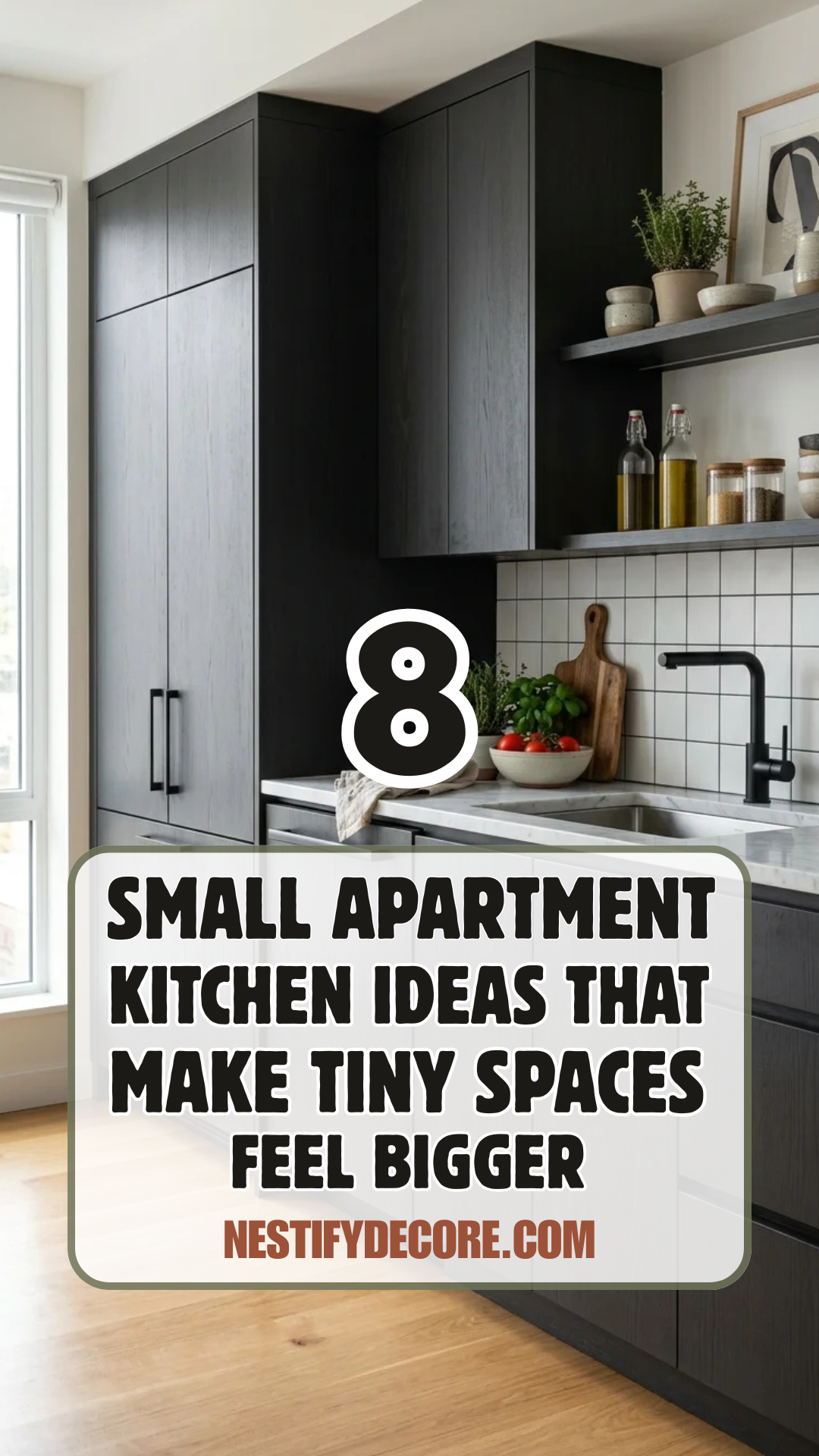
The kitchen is often described as the heart of the home, but in many modern apartments, that heart can feel more like a cramped corner. Living in an urban environment often means sacrificing square footage for location, leading to the dreaded “shoebox” kitchen. However, a lack of space does not have to mean a lack of style or functionality. By employing clever design hacks, strategic storage solutions, and optical illusions, you can transform a tiny cooking area into a culinary sanctuary that feels twice its actual size.
Maximizing a small kitchen is about more than just decluttering; it is about intentionality. It is the art of making every inch count while ensuring the visual landscape remains calm and uncluttered. From the way light bounces off surfaces to the direction in which you store your spices, every detail plays a role in the perception of space. Here are eight transformative ideas to help your small apartment kitchen breathe.
1. Vertical Storage
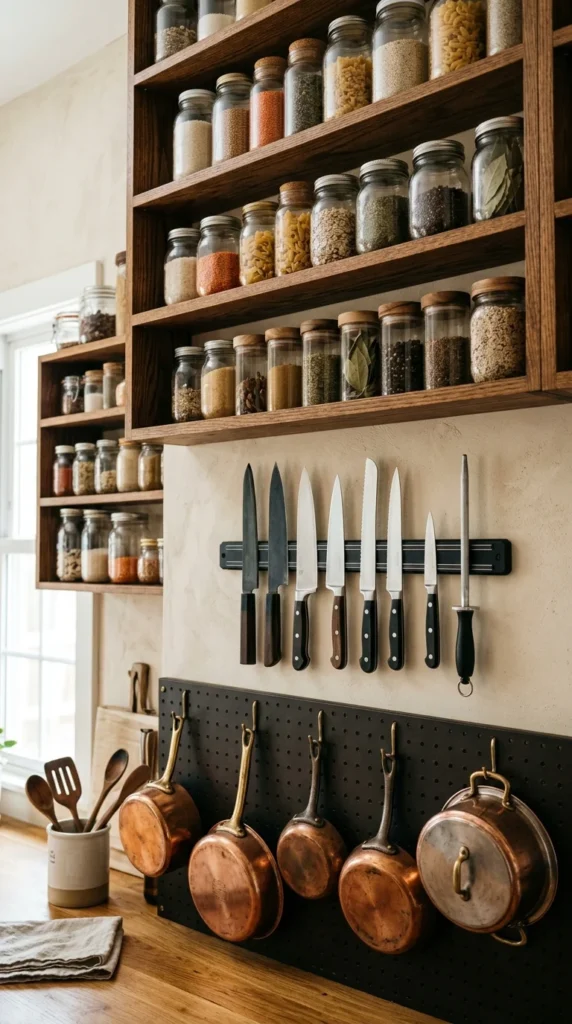
When floor space is at a premium, the only way to go is up. Most apartment dwellers overlook the vast amount of unused real estate on their walls. By taking storage all the way to the ceiling, you not only increase your capacity but also draw the eye upward, creating an illusion of height.
Install a pegboard or a rail system above the backsplash to hang frequently used tools like spatulas, whisks, and measuring cups. Magnetic strips are excellent for keeping knives off the counter while maintaining a sleek, professional look. For the very top shelves—the ones that require a step stool to reach—store seasonal items like turkey roasters or holiday platlets. This keeps the “prime real estate” lower down available for daily essentials, reducing the friction of cooking in a tight space.
2. Mirrored Backsplashes
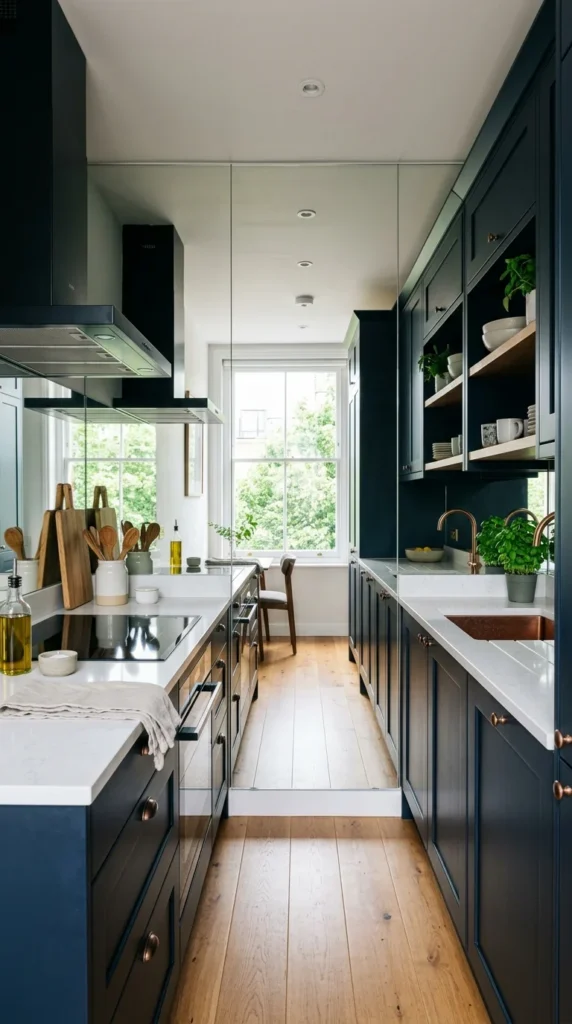
One of the oldest tricks in the interior design book for expanding a room is the use of mirrors. While we often think of mirrors in the bedroom or hallway, they are incredibly effective in the kitchen. Replacing a traditional tile backsplash with a mirrored surface or high-gloss reflective glass can instantly double the visual depth of your countertops.
The mirror reflects the rest of the room and any nearby windows, pulling in natural light and eliminating dark shadows that make spaces feel enclosed. If a full mirror feels too bold, consider “antique” mirrored tiles which provide a softer, speckled reflection while still offering the same space-enhancing benefits. This subtle glow adds a layer of sophistication and luxury to even the most basic rental kitchen.
3. Foldable Furniture
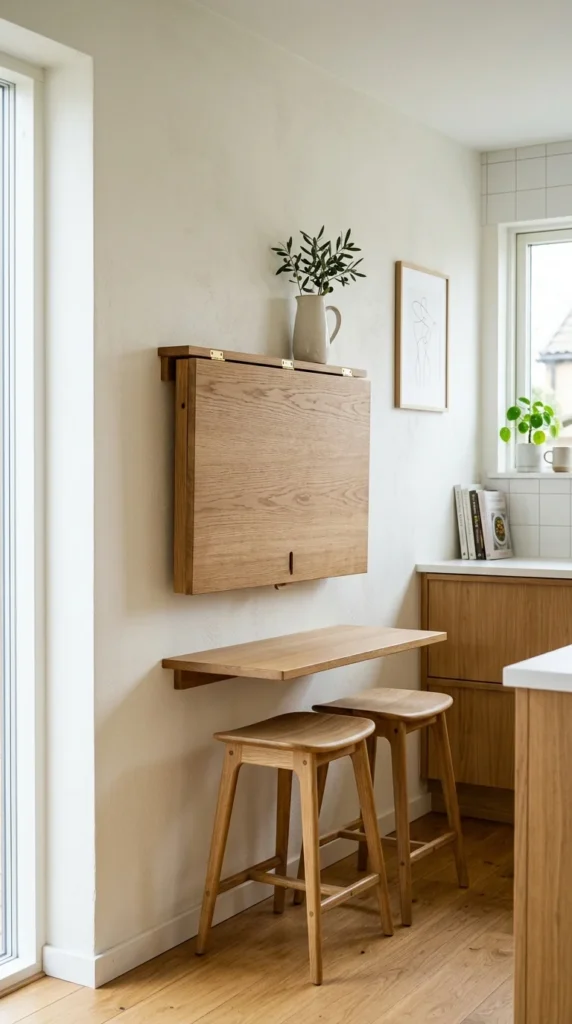
In a small apartment, furniture needs to be as flexible as your lifestyle. Permanent dining tables can often act as roadblocks in a narrow kitchen layout. The solution lies in “disappearing” furniture. A wall-mounted drop-leaf table can serve as a prep station or a dining nook when needed and fold flat against the wall when the meal is over.
Similarly, consider backless bar stools that can be tucked completely underneath the kitchen island or counter overhang. By keeping the floor path clear of protruding chair legs and bulky table corners, you maintain a “flow” that makes the kitchen feel open and navigable. Look for pieces made of light-colored wood or transparent acrylic to keep the visual weight of the furniture to a minimum.
4. Uniform Palette
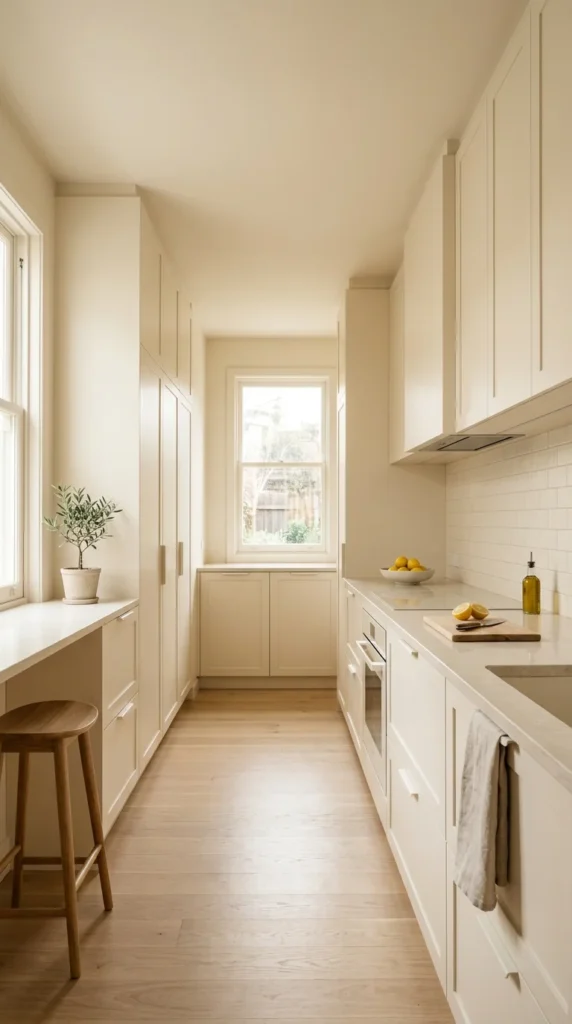
Visual clutter is the enemy of small spaces. When a kitchen has dark cabinets, a bright backsplash, and different colored walls, the eye constantly stops at the boundaries of each element. This “choppiness” makes the room feel segmented and smaller. By choosing a monochromatic or uniform color palette, you blur the lines where one object ends and another begins.
Light colors—such as whites, soft greys, or pale beiges—are the gold standard for small kitchens because they reflect the most light. Painting your cabinets the same color as your walls creates a “hidden” look, where the storage blends into the architecture. This seamless transition tricks the brain into perceiving a single, expansive area rather than a series of cramped boxes.
5. Under-Cabinet Lighting
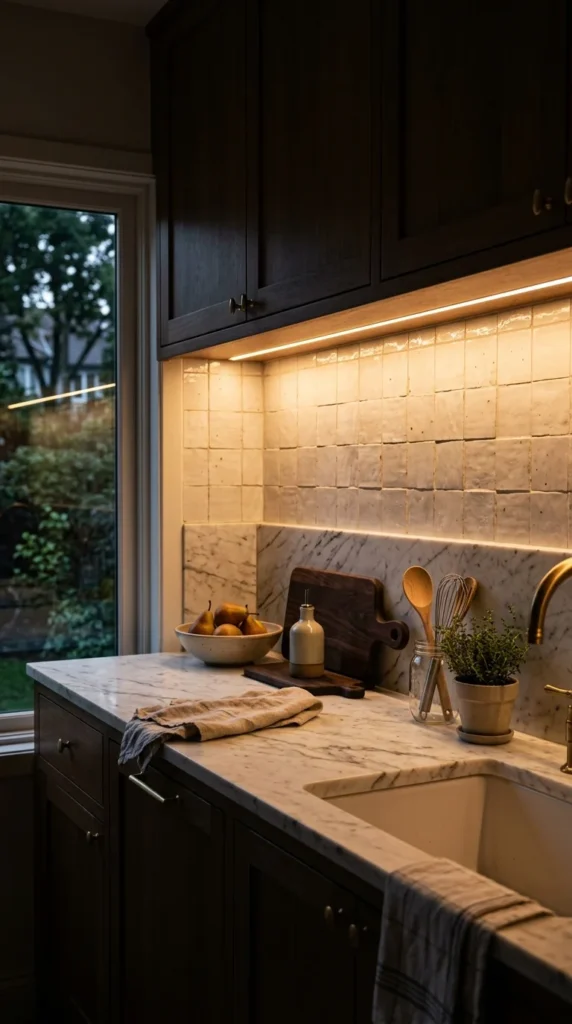
Lighting is perhaps the most underrated tool in small-space design. A single overhead light often casts shadows directly over the areas where you work, making the kitchen feel cave-like and cramped. Under-cabinet LED strips are a game-changer for tiny kitchens.
By illuminating the “dead zones” beneath your upper cabinets, you highlight the full depth of your countertops. This eliminate shadows and makes the entire perimeter of the room visible, which psychologically increases the sense of space. Today’s LED options are often “plug-and-play” or battery-operated, meaning even renters can add high-end task lighting without a call to an electrician.
6. Integrated Appliances
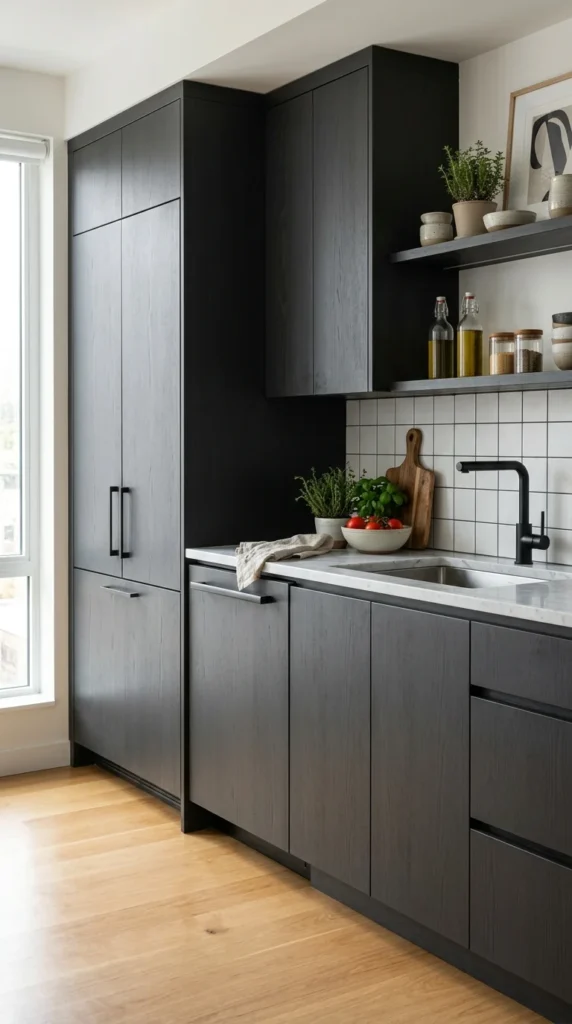
In a small kitchen, the sight of a bulky, stainless steel refrigerator or a dark dishwasher can break up the visual flow and remind you of the room’s limitations. Integrated or “panel-ready” appliances allow you to mount cabinet fronts directly onto the appliance doors.
When the fridge looks exactly like the pantry next to it, the kitchen appears as a continuous wall of cabinetry rather than a collection of heavy machinery. For those who cannot replace their appliances, even smaller “tucked away” solutions help. Consider a “microwave drawer” or keeping the toaster and coffee maker inside an “appliance garage” (a cabinet with a roll-up door) to keep the counters completely clear. A clear counter is the fastest way to make a kitchen feel larger.
7. Rolling Carts
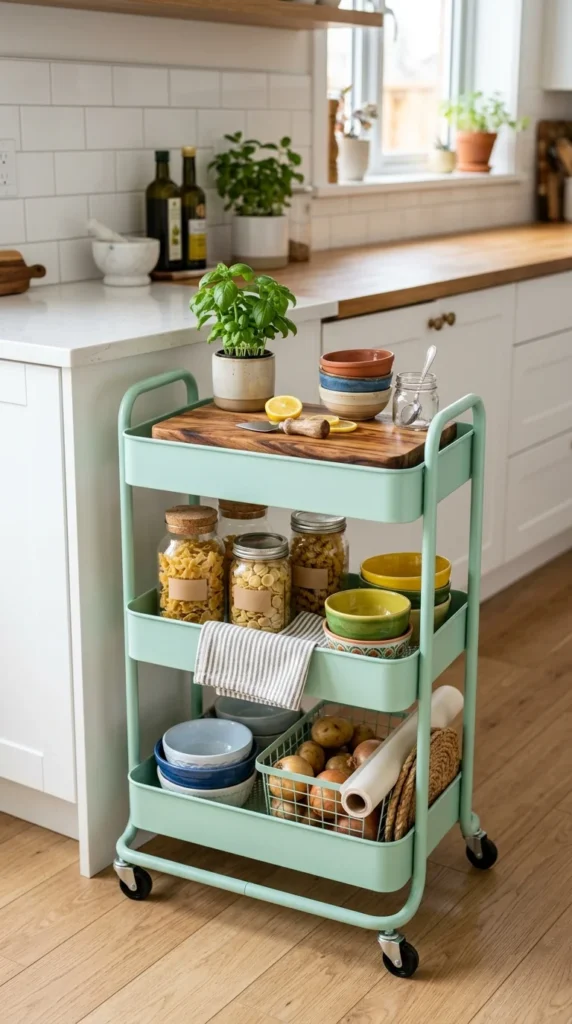
If you lack permanent counter space, bring in a “mobile island.” A slim rolling cart provides an extra surface for food prep and additional shelving for storage, but the key is its mobility. When you are hosting or need extra floor space to move around, you can simply wheel the cart into a corner or an adjacent room.
Rolling carts also offer an opportunity to add a pop of personality to the kitchen. Whether it’s a rustic wooden cart or a sleek industrial metal trolley, it provides a functional focal point. Use the bottom shelves for heavy items like stand mixers or cast iron pans, which are often difficult to store in standard apartment cabinets.
8. Glass Cabinetry
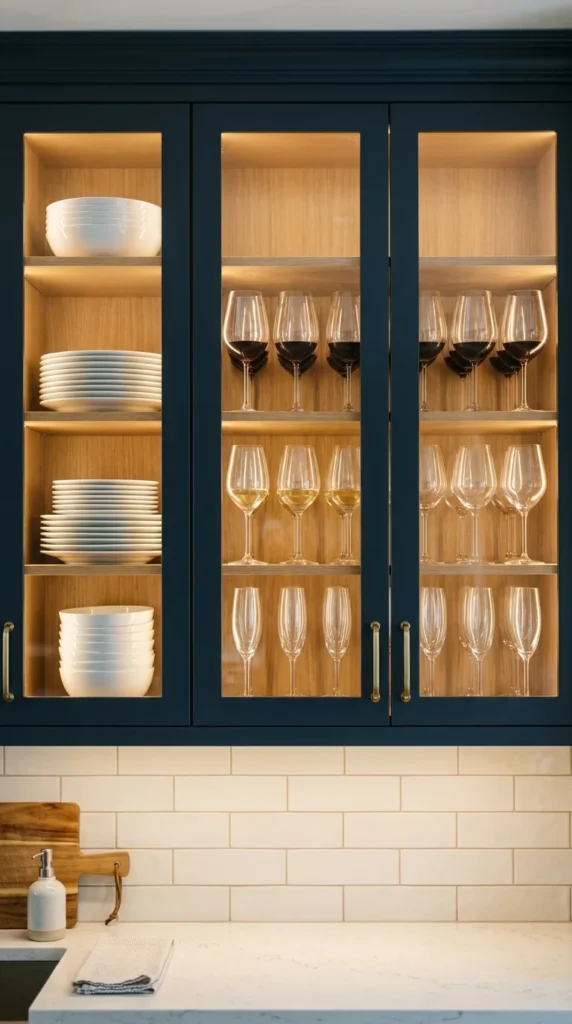
Solid cabinet doors can sometimes feel like a wall closing in on you. Replacing a few solid cabinet fronts with glass inserts can provide “visual breathing room.” Much like the mirrored backsplash, glass doors allow the eye to travel into the cabinet, essentially adding several inches of perceived depth to the room’s boundaries.
The trick to making glass cabinets work is organization. Use them to display your most attractive, uniform items—like all-white dishes or clear glassware. If you’re worried about keeping things perfectly tidy, consider “frosted” or “fluted” glass. These options still provide the lightness and depth of glass while obscuring the details of the clutter inside, giving you the best of both worlds.