
Living in a small apartment often feels like a constant battle between functionality and aesthetics. However, limited square footage does not have to mean a compromise on style. In fact, many of the world’s most luxurious residences in cities like Paris, New York, and Tokyo are compact studios designed with such precision that they exude an air of opulence.
The secret to making a small space look expensive lies in intentionality. By shifting the focus from “filling the space” to “curating the environment,” you can create a home that feels bespoke, high-end, and expansive. Here are eight design strategies to elevate your small apartment into a luxury sanctuary.
1. Large Rugs
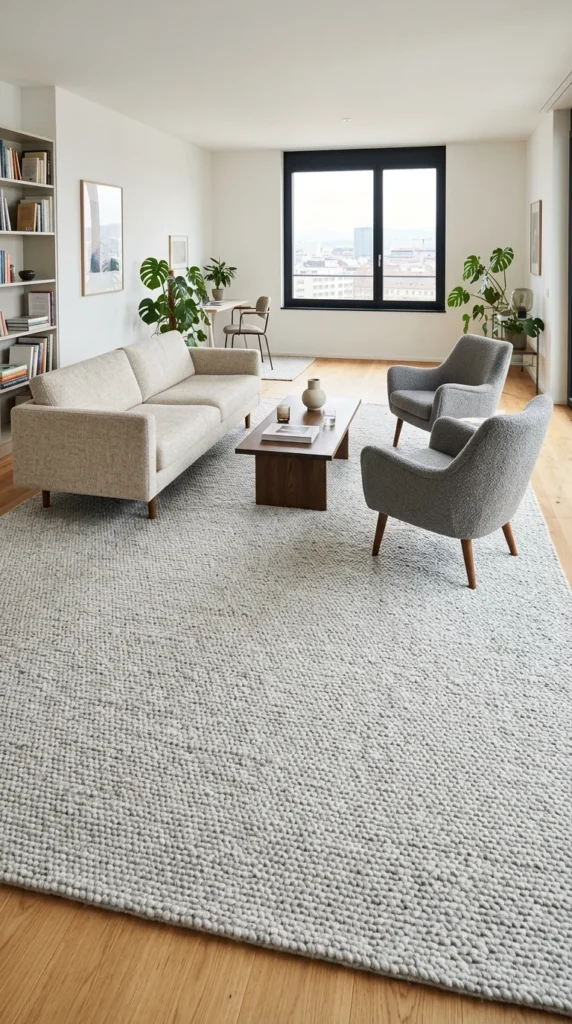
One of the most common mistakes in small apartment decorating is choosing a rug that is too small. A “postage stamp” rug floating in the middle of a room visually chops up the floor space, making the area feel cramped and disjointed. To create a high-end look, you must go big.
An oversized rug acts as an anchor for the room. When you choose a rug that extends under all major pieces of furniture—or at least the front legs of the sofa and chairs—it creates a unified “zone.” This trick fools the eye into perceiving the room as much larger than it actually is. For an expensive feel, opt for natural materials like wool, silk blends, or high-quality jute. Textures like a subtle herringbone or a low-pile plush finish add a layer of sophistication that synthetic materials often lack.
2. Statement Lighting
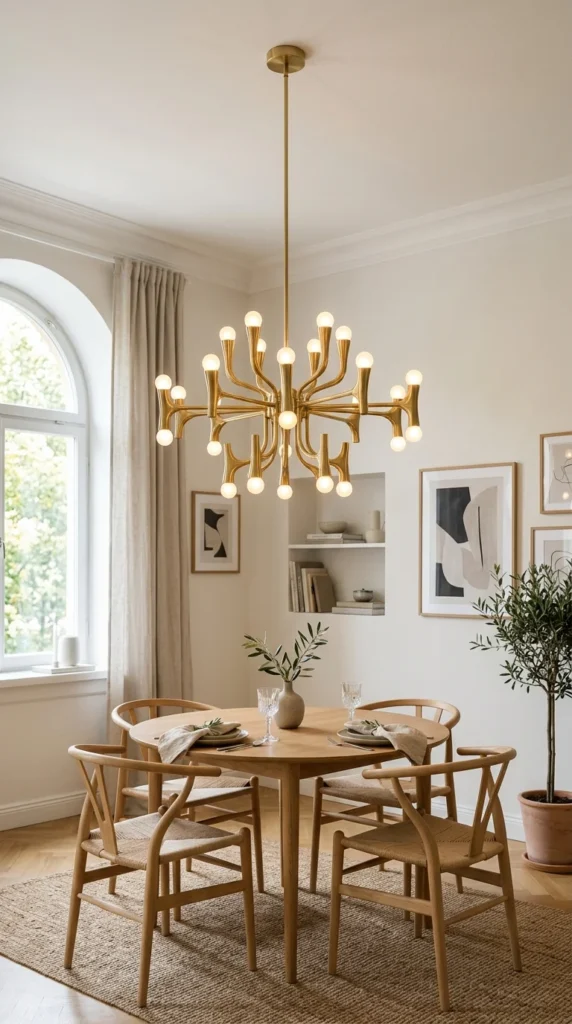
Standard apartment lighting is often functional but rarely fashionable. To immediately elevate your home, treat your lighting like jewelry. Replacing a basic flush-mount ceiling light with a sculptural chandelier or a modern pendant creates an immediate focal point and signals that the space has been professionally designed.
In a small apartment, you should use lighting to create “layers.” Avoid using only the overhead light. Instead, incorporate:
- Floor Lamps: An arched brass lamp can add height and drama.
- Table Lamps: Use these on sideboards or nightstands to create a soft, warm ambiance.
- Sconces: For renters, battery-operated or plug-in wall sconces offer a high-end, custom look without the need for rewiring.
High-end design is as much about how a room feels as how it looks, and warm, layered lighting is the fastest way to achieve a “boutique hotel” vibe.
3. Oversized Art
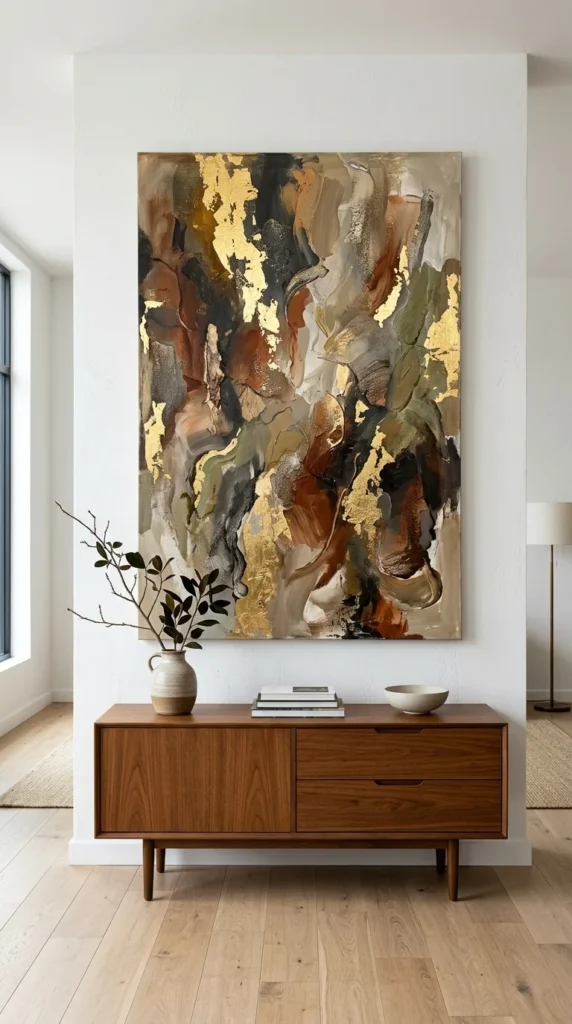
It may seem counterintuitive to put large art in a small room, but a gallery wall of small frames can often look cluttered and “busy.” Conversely, a single, large-scale piece of art creates a sense of grandeur. It provides a focal point that draws the eye upward and outward, giving the walls a sense of purpose.
When selecting art to make a space look expensive, consider the framing. A thin, professional frame in black, gold, or natural wood adds a polished finish. If you are on a budget, you can frame a large piece of high-quality textile or even a minimalist DIY abstract canvas. The key is the scale; the art should take up a significant portion of the wall to command the room’s attention.
4. Layered Textiles
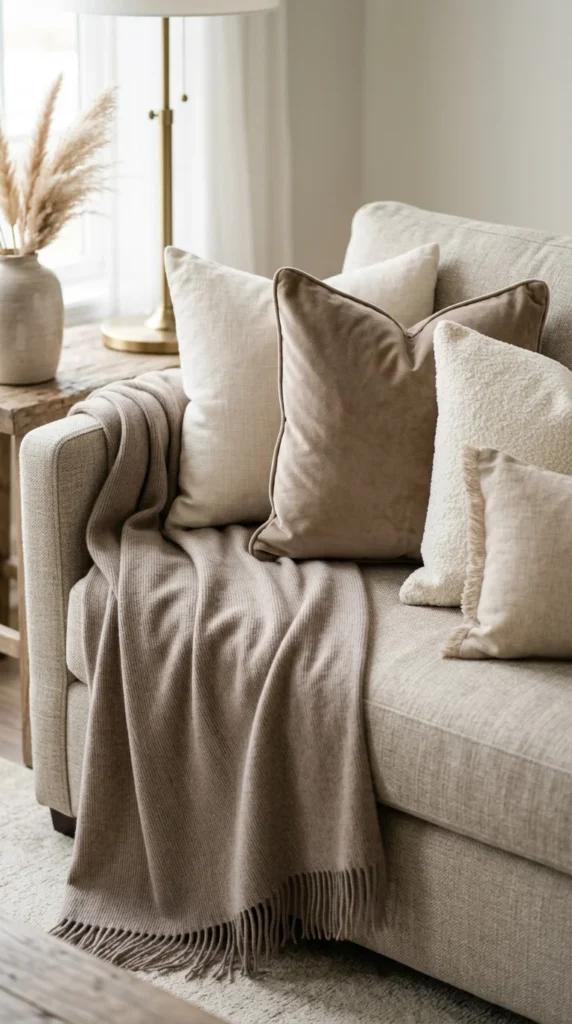
Richness in interior design comes from “tactile depth.” An expensive-looking home is one that looks comfortable, inviting, and layered. In a small space, you can achieve this by mixing different high-quality fabrics.
Instead of matching sets, mix and match textures:
- Velvet: Adds a touch of regal weight and reflects light beautifully.
- Linen: Provides a relaxed, organic high-end feel.
- Silk or Satin: Offers a subtle sheen that suggests luxury.
- Wool or Bouclé: Adds modern architectural interest and warmth.
By sticking to a tight color palette but varying the textures, you create a sophisticated look that feels curated over time rather than bought all at once from a big-box store.
5. Ceiling Drapes
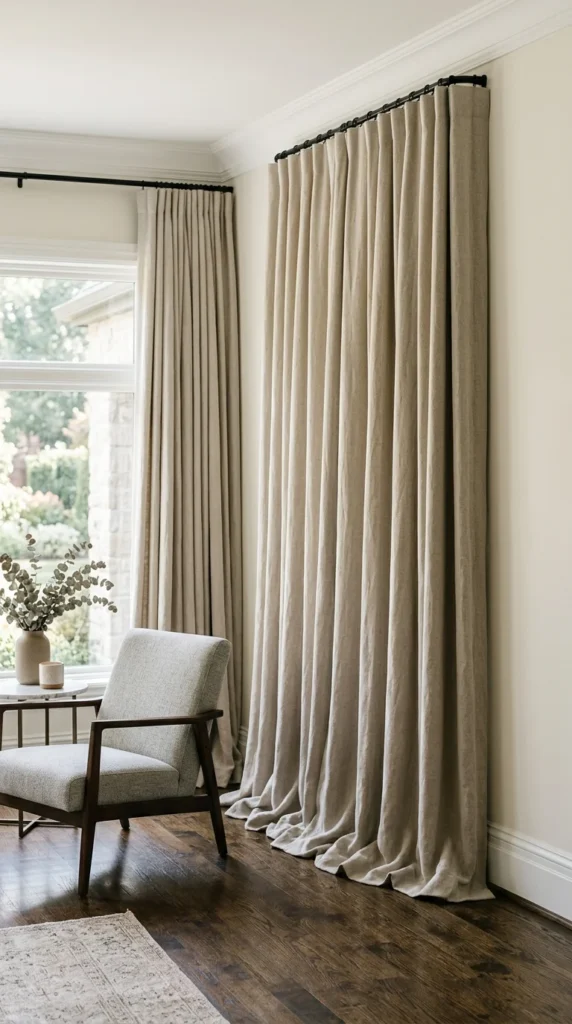
If you want to make your ceilings feel ten feet tall, you must rethink your window treatments. Most people hang curtains just above the window frame. To achieve a luxury look, hang your curtain rod as close to the ceiling as possible and extend it several inches wider than the window on both sides.
This technique, known as “high and wide,” creates the illusion of massive windows and higher ceilings. Ensure your curtains reach the floor; “high-water” drapes that end a few inches above the floor are a tell-tale sign of an amateur design. For the most expensive look, choose “blackout” lined drapes in a heavy fabric like velvet or a structured linen blend, allowing them to “puddle” slightly (about an inch) on the floor.
6. Metallic Accents
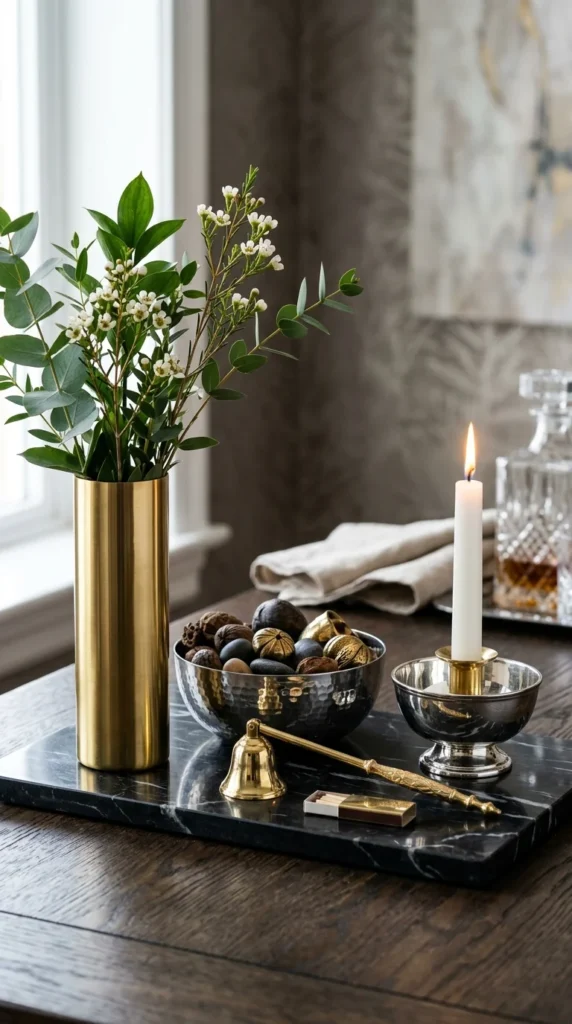
Nothing says “luxury” quite like the subtle glint of metal. However, the key to making this look expensive rather than gaudy is moderation and finish. Incorporating metallic accents—such as brass, copper, or polished chrome—reflects light and adds a “jewelry” element to the room.
Focus on small but impactful details:
- Cabinet Hardware: Swap out standard plastic or wood knobs for heavy brass or matte black pulls.
- Trays and Vases: A metallic tray on a coffee table can corral remote controls and magazines, turning clutter into a curated display.
- Furniture Legs: A sofa or coffee table with slim metallic legs feels lighter and more “designer” than bulky wooden blocks.
Mixing metals is also a modern way to look high-end. Pairing a gold floor lamp with silver picture frames can make the room look less like a showroom and more like a curated home.
7. Hidden Storage
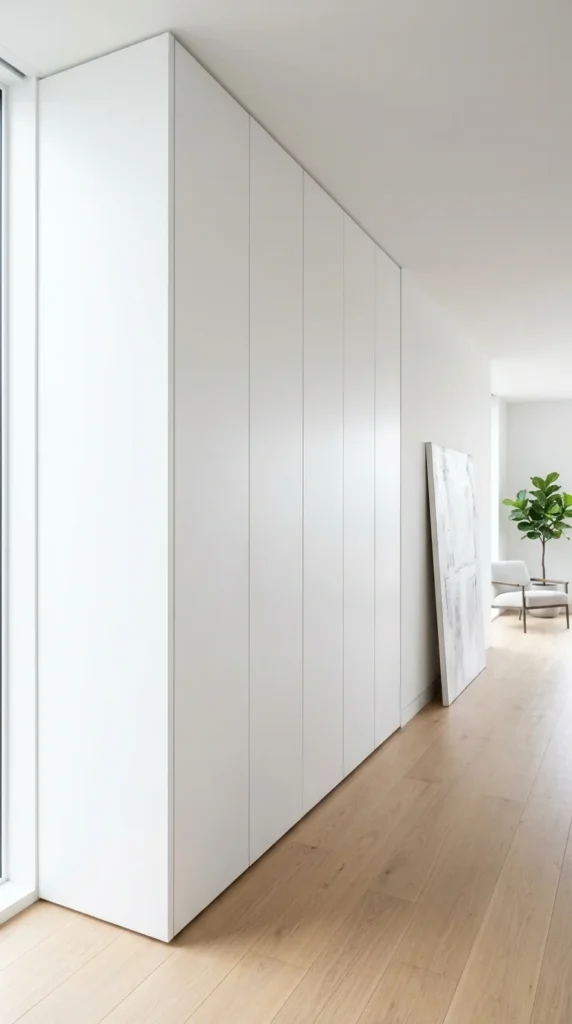
Clutter is the enemy of luxury. In a small apartment, items like shoes, mail, and electronics can quickly overwhelm the space. Expensive-looking homes prioritize “visual silence.” This means everything has a place, and that place is usually out of sight.
Invest in “double-duty” furniture:
- Storage Ottomans: These provide extra seating while hiding blankets or board games.
- Lift-top Coffee Tables: Perfect for hiding laptops and chargers.
- Closed Cabinetry: Instead of open shelving, which can look messy, opt for sideboards or credenzas with doors.
When the surfaces of your home are clear of daily debris, the architectural lines of your furniture and the beauty of your decor pieces can finally shine.
8. Monochromatic Palette
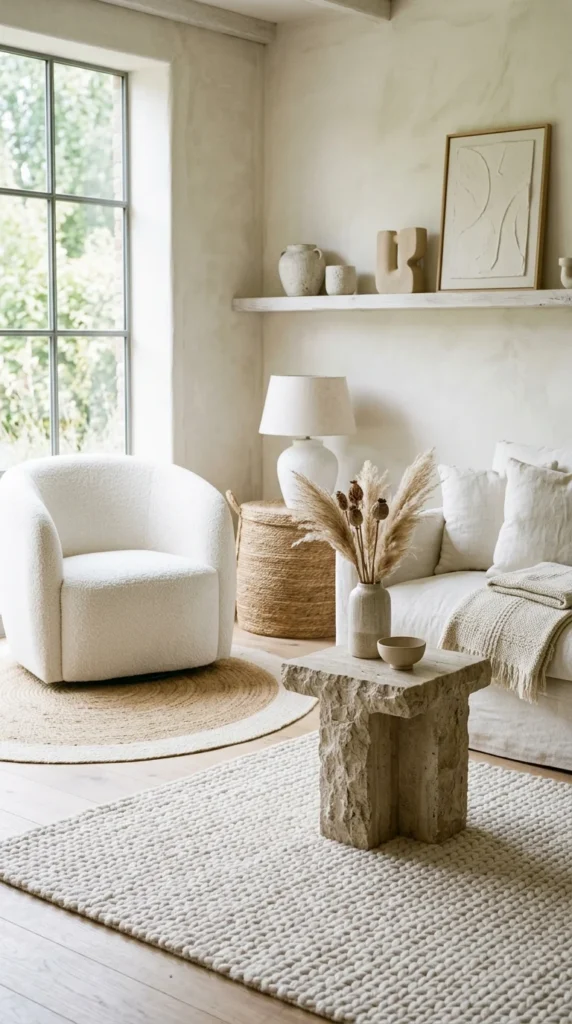
Using a monochromatic or tonal color palette is one of the oldest tricks in the professional designer’s handbook. When you use varying shades of the same color (such as whites, beiges, or greys), the boundaries of the room seem to disappear, making the space feel airy and expensive.
A monochromatic room isn’t “boring” if you focus on contrast in texture and shape. A matte white wall paired with a high-gloss white ceramic vase and a soft white sheepskin rug creates a sophisticated, multi-dimensional look. This color strategy also makes any high-quality furniture pieces you own stand out more clearly, giving them the “hero” status they deserve in a luxury home.