
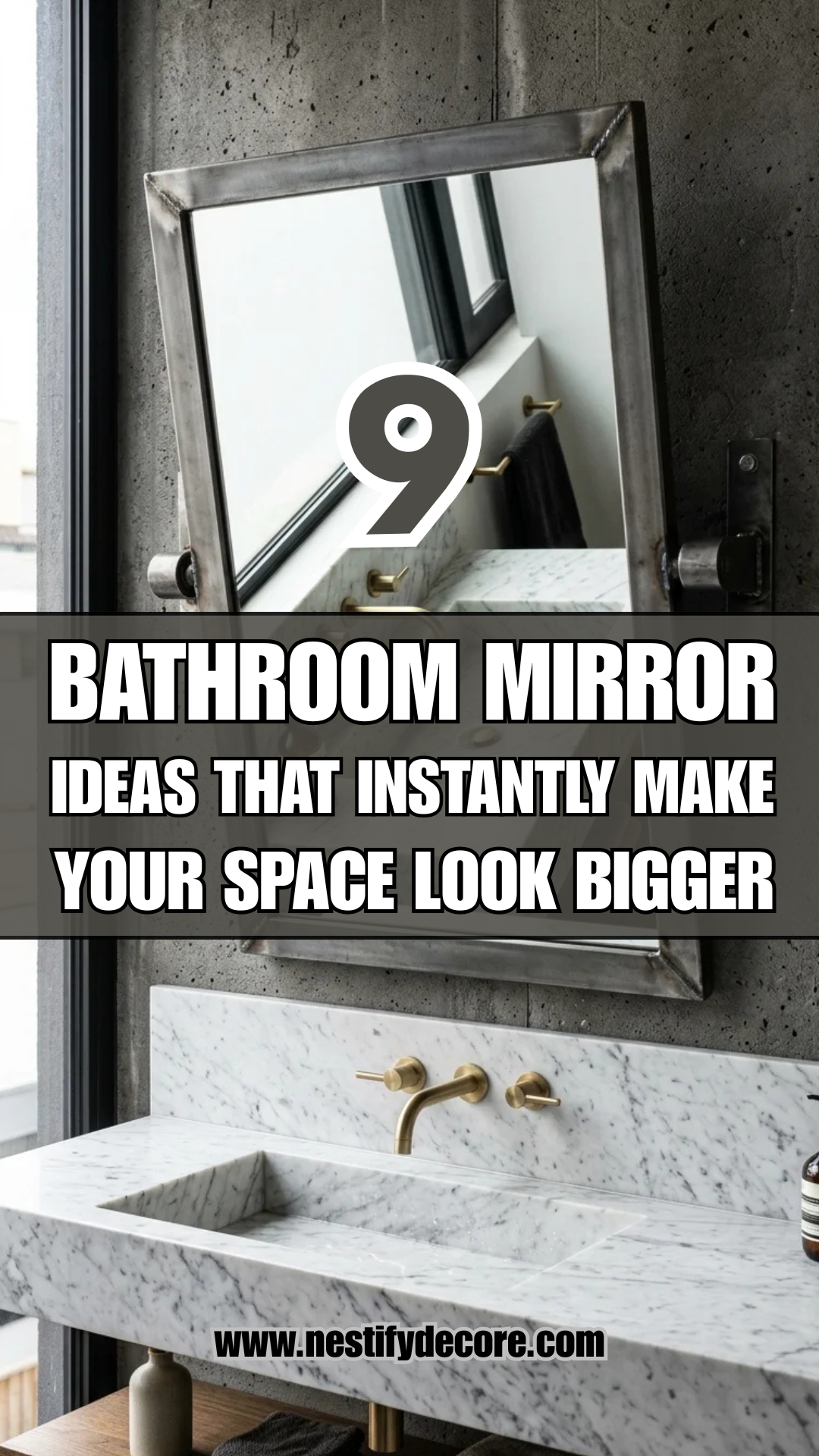
The bathroom is often the smallest room in the house, yet it is one of the most frequently used. When square footage is at a premium, interior designers turn to one specific tool to perform a visual “magic trick”: the mirror. A strategically placed mirror does more than just provide a place to check your reflection; it bounces light, creates the illusion of depth, and can effectively double the perceived size of a room.
Whether you are dealing with a cramped powder room or a narrow master ensuite, the right mirror configuration can transform a claustrophobic atmosphere into an airy sanctuary. Here are nine innovative bathroom mirror ideas designed to maximize your space and elevate your home’s aesthetic.
1. Wall-to-Wall
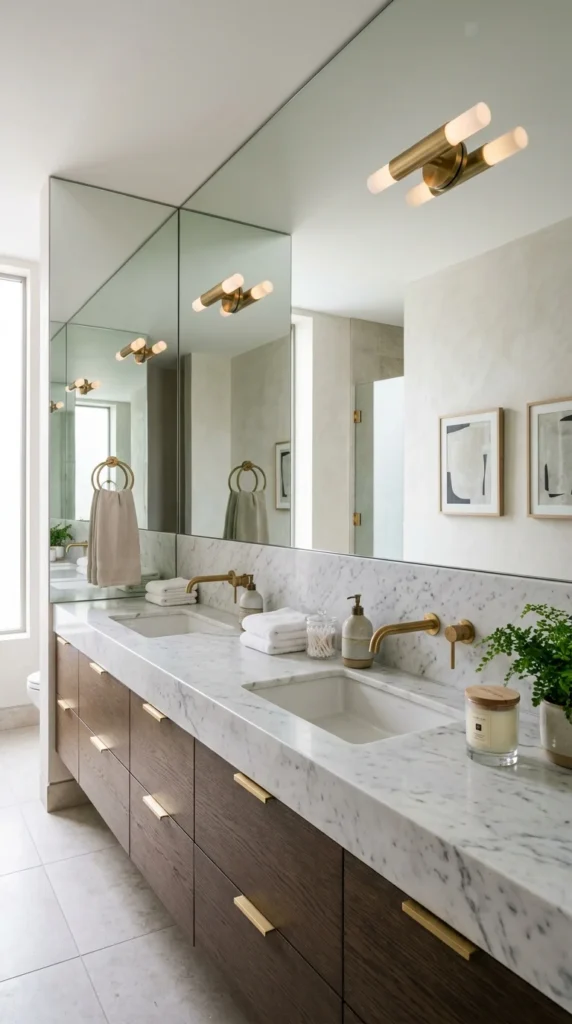
One of the most effective ways to eliminate the boundaries of a small bathroom is to install a wall-to-wall mirror. By extending the glass from one edge of the wall to the other, you remove the visual “stops” created by frames or empty wall space. This creates a seamless transition that makes the vanity area feel twice as wide.
- Continuous Reflection: Because the mirror covers the entire width, it reflects the opposite walls and lighting fixtures without interruption, making the room feel like it continues forever.
- Custom Fit: These are typically custom-cut to fit your specific dimensions, allowing you to work around backsplash tiles or unique architectural alcoves.
- Pro Tip: If you have a double vanity, a single wall-to-wall mirror is often more effective at enlarging the space than two individual mirrors, as it unifies the design.
2. Backlit LED
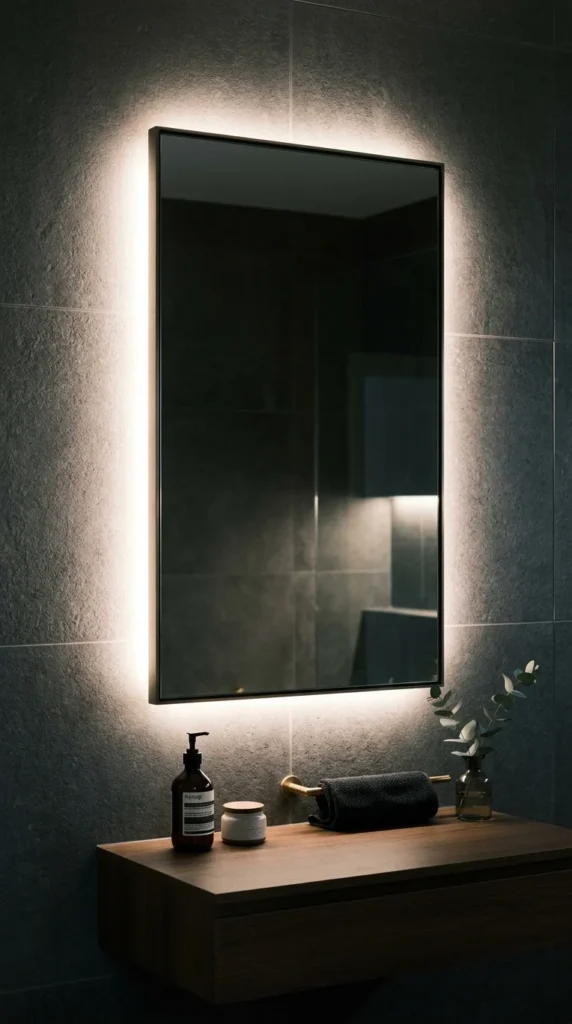
Backlit mirrors, often featuring integrated LED strips, are a favorite in contemporary design for their ability to add “weightless” depth. By casting light behind the mirror rather than just from the front, the mirror appears to float away from the wall.
- Depth Perception: The shadow and light play created behind the glass add a three-dimensional layer to the wall, which prevents the room from feeling flat or boxed in.
- Superior Lighting: The even distribution of light eliminates harsh shadows on your face, which is both functional for grooming and aesthetically pleasing for the room’s overall ambiance.
- Minimalist Appeal: Because the lighting is built-in, you can often skip bulky wall sconces, freeing up more wall space and reducing visual clutter.
3. Large Circles
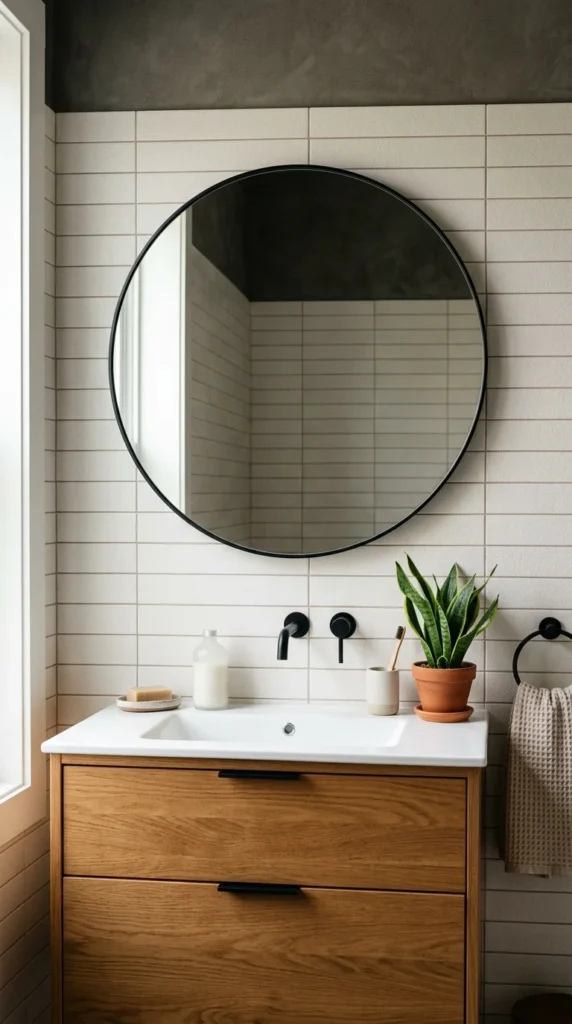
Most bathrooms are filled with hard angles and straight lines—think of the tiles, the tub, the vanity, and the door. Introducing a large circular mirror provides a necessary visual break. The organic shape draws the eye to a central focal point, making the walls around it feel less restrictive.
- Softening the Space: The curves of a round mirror counteract the “boxy” feeling of small bathrooms, creating a more fluid and open environment.
- The Porthole Effect: Large round mirrors can act like a “porthole” or a window, tricking the brain into seeing an opening in the wall rather than a solid surface.
- Size Matters: To maximize the enlarging effect, go as large as your vanity allows. A diameter that nearly matches the width of the sink cabinet creates a bold, expansive statement.
4. Floor-to-Ceiling
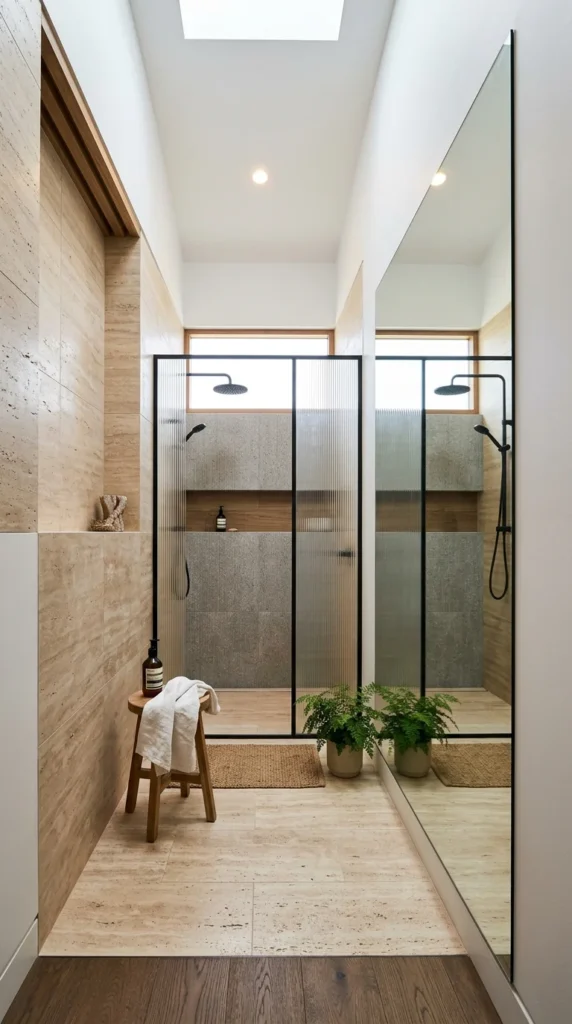
Verticality is a powerful tool in small-space design. If you cannot expand the room horizontally, you should draw the eye upward. A floor-to-ceiling mirror emphasizes the height of the room, making even a low-ceilinged bathroom feel grander.
- Vertical Stretch: By reflecting the floor and the ceiling simultaneously, this mirror style creates a vertical “loop” that makes the room appear significantly taller.
- Dramatic Impact: This is an excellent choice for narrow bathrooms or “dead” walls that otherwise serve no purpose.
- Full-Length Utility: Beyond the spatial benefits, a floor-to-ceiling mirror serves as a full-length dressing mirror, adding luxury-level functionality to your daily routine.
5. Mirrored Cabinets
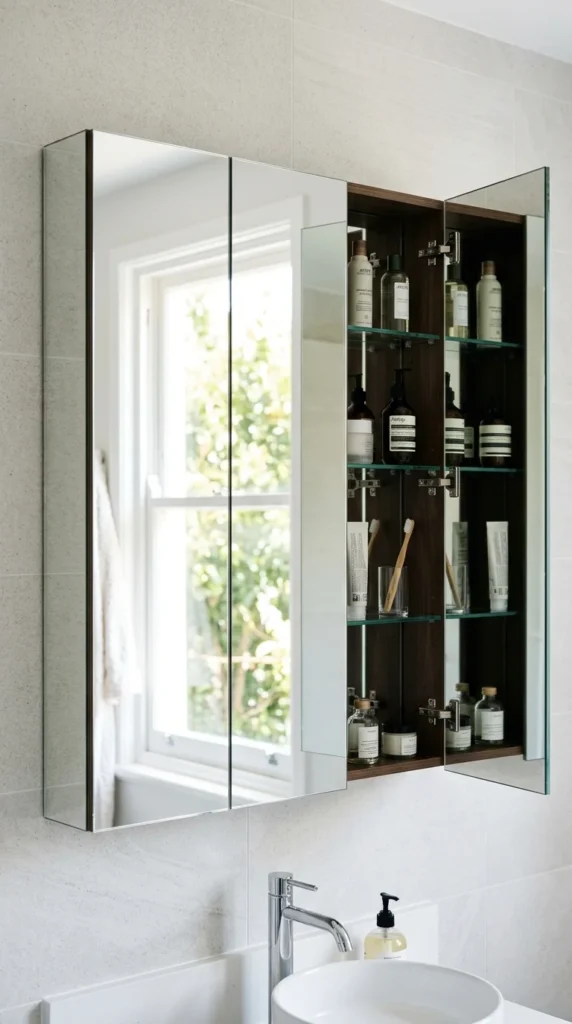
In a small bathroom, storage is often the enemy of space. Bulky cabinets can protrude into the room, making it feel cramped. Mirrored cabinets solve this by “hiding” the storage behind a reflective surface, essentially making the bulk disappear.
- Hidden Bulk: Instead of seeing a solid cabinet box, you see the reflection of the rest of the room. This “camouflages” the storage unit.
- Recessed Options: For the best results, choose a recessed mirrored cabinet that sits inside the wall. This leaves the mirror flush with the surface, maximizing every inch of floor space.
- Tri-View Angles: Many mirrored cabinets feature multiple panels that can be angled, allowing you to see the back of your head while also reflecting different corners of the room, further enhancing the sense of openness.
6. Frameless Designs
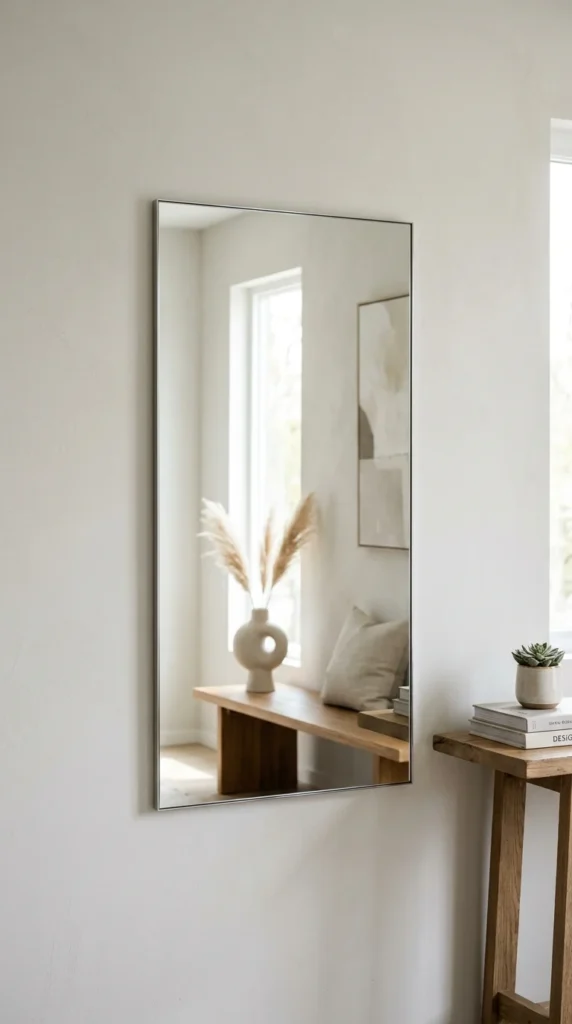
Frames act as a border, telling the eye exactly where the mirror ends. In a small space, you want to avoid these hard boundaries. Frameless mirrors provide a clean, “infinite” look that blends into the wall.
- Visual Continuity: Without a frame, the reflection seems to merge with the wall itself. This reduces visual “noise” and keeps the bathroom looking streamlined and uncluttered.
- Modern Elegance: Frameless mirrors are timeless and fit nearly any decor style, from ultra-modern to transitional.
- Beveled Edges: If you want a touch of sophistication without a bulky frame, choose a mirror with a beveled edge. The angled glass at the perimeter catches and refracts light like a prism, adding a subtle sparkle.
7. Pivot Mirrors
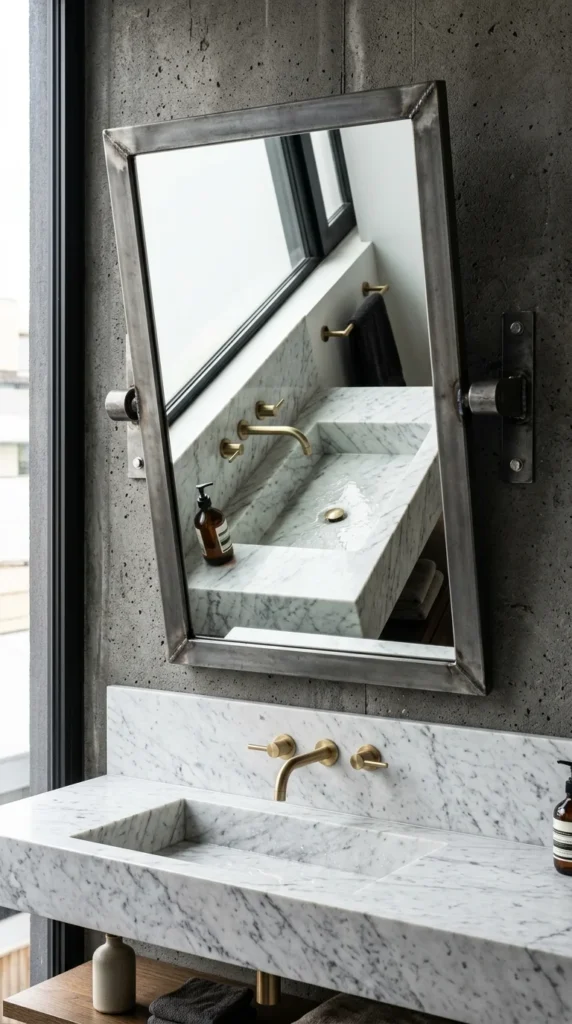
Pivot mirrors are mounted on brackets that allow the glass to sit a few inches away from the wall. This gap is the secret to making the space look bigger.
- Floating Illusion: Because the mirror isn’t flush against the wall, it creates a sense of airiness. The space behind the mirror becomes part of the room’s volume.
- Adjustable Perspectives: The ability to tilt the mirror allows you to change the angle of reflection. You can tilt it upward to reflect more of the ceiling or a window, instantly brightening a dark corner.
- Architectural Interest: The hardware of a pivot mirror adds a decorative element without the heaviness of a full frame, providing a “leggy” look that feels lighter than traditional mounts.
8. Multiple Mirrors
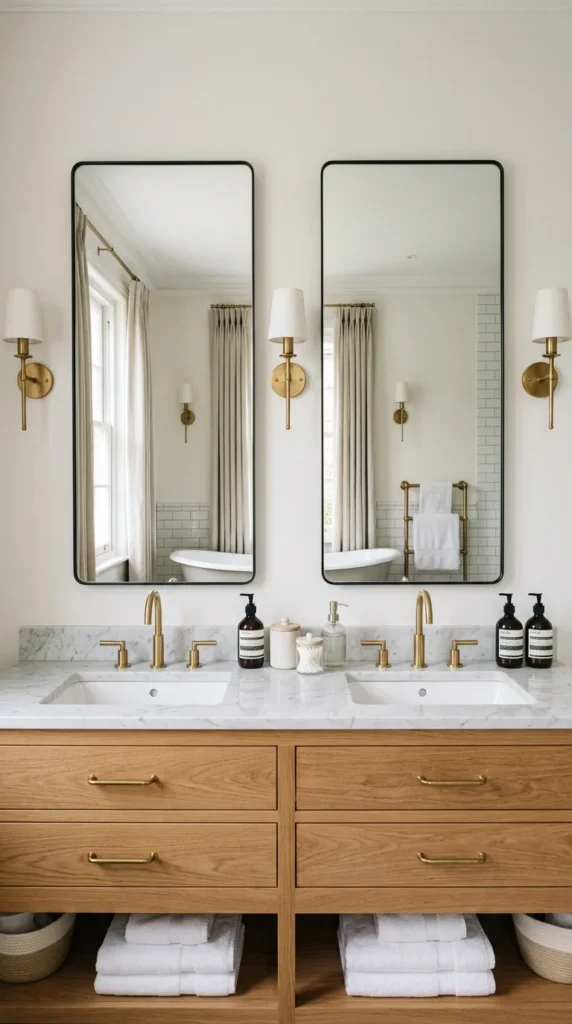
If you have a wide wall but don’t want a single massive piece of glass, using multiple mirrors can be just as effective. This technique is often used to create a “gallery” feel or to define separate “zones” within the bathroom.
- Rhythmic Reflection: Placing two or three identical mirrors in a row creates a sense of rhythm and symmetry. This organization makes the brain perceive the space as more orderly and, therefore, larger.
- Breaking Up the Wall: Multiple mirrors reflect light from different angles, creating a more dynamic play of light throughout the room than a single flat surface might provide.
- Height over Width: Using tall, thin “portrait” style mirrors side-by-side draws the eye up while still providing enough horizontal reflection to widen the room.
9. Arched Mirrors
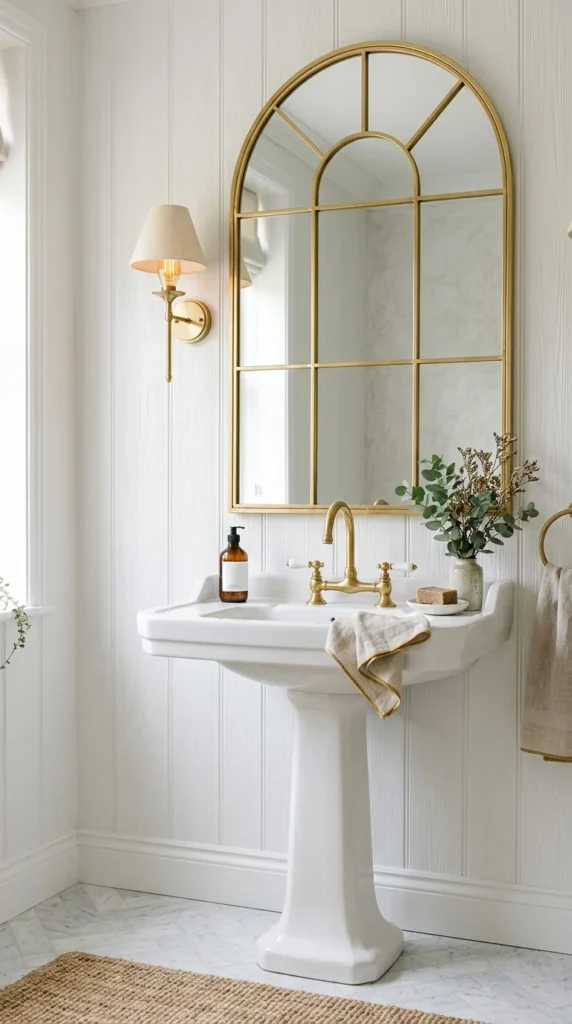
The arched mirror is a hybrid between the rectangular and the circular. Its flat bottom allows it to sit perfectly above a vanity, while the curved top mimics the shape of a classic window.
- The Window Illusion: Because many traditional windows feature an arch, our brains often interpret an arched mirror as an architectural opening to the outside. This is a powerful psychological trick for windowless bathrooms.
- Heightened Elegance: The upward curve of the arch adds height to the vanity area, making the ceiling appear further away.
- Decorative Depth: An arched mirror adds a layer of architectural sophistication that makes the bathroom feel like a custom-designed suite rather than a standard utility room, increasing the perceived value and size of the space.